Introduction
The dynamics of industrial automation have fundamentally transformed modern factories and production facilities: smart machines take over assembly tasks, and sensor-based systems monitor processes. Technology and automation reduce production times, increase safety, and enable cost-efficient manufacturing. Looking ahead to 2025 and beyond, the value of robust automation solutions remains high. But one key question remains: What ensures that these systems remain reliable over time? The answer is IPC longevity. IPCs (Industrial Personal Computers) are the control centers of many automation solutions. They are robust computers for harsh environments, and their lifespan (often 5–10 years or more) minimizes downtime and costs because hardware does not need to be constantly replaced.
Trends, advantages and entry paths into industrial automation
Automatisierung hat sich von einfachen Maschinensteuerungen weiterentwickelt hin zu komplexen Systemen aus Sensorik, Controllern und Software. Die smarte Fabrik bietet Konnektivität und Datenanalyse; die nächste Phase ist die Zusammenarbeit von Mensch und Roboter. Gute Automationslösungen liefern die Technik und Systeme zur nahtlosen Integration.
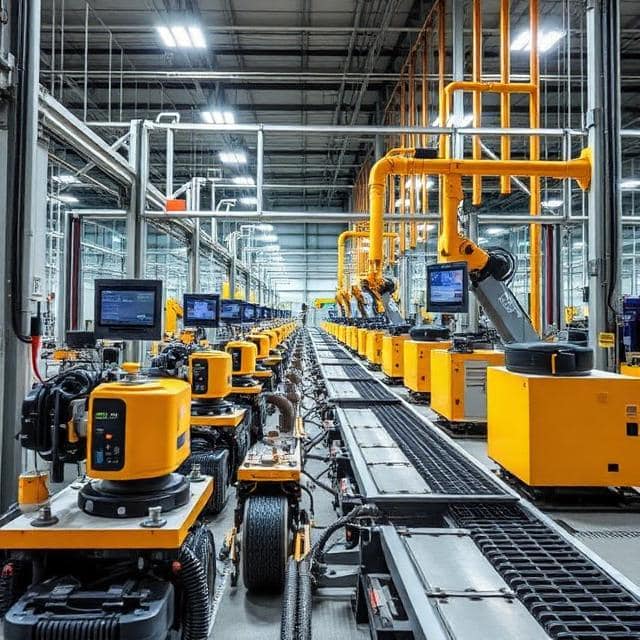
In industries such as automotive, food processing, pharmaceuticals, and electronics, automation leads to fewer errors, higher productivity, and improved safety: Conveyor belts carry heavy loads, robotic arms assemble with high precision, and camera systems detect defects faster than the human eye. A modern production line—with hundreds of robots, sensors, and transporters—runs around the clock. Without reliable automation solutions, such a line would quickly grind to a halt. At the heart of it all is robust hardware: Without durable industrial PCs (IPCs), even sophisticated software solutions fail because hardware failures force costly system upgrades.
Key trends that will shape industrial automation by 2025
Smart maintenance (predictive maintenance)
Devices share real-time data, warn of failures, and reduce surprises. Sensors measure temperature, vibration, and wear; managers receive alerts before problems escalate—saving millions in downtime costs.
AI and data-driven process optimization:
Machine learning models analyze historical data, forecast demand, optimize energy consumption, and schedule maintenance. AI makes automation solutions smarter over time.
Edge and cloud computing:
Edge processes data near the source in real time; the cloud stores historical data for analysis. This combination enables rapid responses and long-term learning for everything from quality assurance to supply chain optimization.
Robotics & Cobots (collaborative robots)
Cobots are cheaper and easier to program; they work safely alongside humans, take over monotonous tasks and increase efficiency.
Ecological focus
Automation reduces waste and energy consumption through better resource utilization, recycling processes and optimized manufacturing processes. Customers and regulators are increasingly demanding „green“ solutions.
5G-Konnektivität
Hohe Bandbreiten und geringe Latenz ermöglichen Fernüberwachung, Remote-Troubleshooting und datenintensive Echtzeitanwendungen.
What is an IPC and why is it special?
Industrial PCs (IPCs) are PC-based control units specifically designed for industrial applications. Unlike consumer PCs, they are resistant to dust, shock, vibration, wide temperature ranges, and high humidity. Typical features:
- Betriebstemperaturen z. B. von −40 °C bis +85 °C
- Staub- und wasserdichte Gehäuse
- Stoß- und vibrationsfestigkeit
- Vielfältige I/O-Ports
- Fanless designs (no moving parts) → less maintenance
IPCs often offer manufacturer support for 10 years or more — crucial, because frequent replacement cycles disrupt production processes and drive up costs.
Why IPC longevity is so important in automation
- Enormous cost savings: Frequent replacements cause material costs, installation expenses, training, and production downtime. Long-lasting IPCs spread investment costs over 5–10 years and make budget planning predictable.
- Nahezu Null Ausfallzeiten
Fanless-Designs und Solid-State-Komponenten reduzieren mechanische Ausfälle. Redundante Stromversorgungen und robuste Bauweise sorgen für kontinuierliche Betriebsbereitschaft. - Zukunftssichere Software-Kompatibilität
Lange Hardware-Support-Zyklen ermöglichen Software-Updates ohne teure Hardwaremigrationen — wichtig bei schnellen Software-Generationssprüngen und neuen Sicherheitsstandards. - Umweltverantwortung
Längere Lebenszyklen reduzieren Elektronikschrott (E-Waste) und unterstützen nachhaltige Unternehmensziele. - Robuste Sicherheit
Kontinuierliche Sicherheitsupdates über lange Supportzeiträume verringern Verwundbarkeiten und das Risiko kostspieliger Sicherheitsvorfälle.
Comparison table: Consumer PC vs. Industrial PC (with long lifespan)
| Merkmal | Consumer-PC | Industrie-PC (langer Lifecycle) |
| Lebensdauer | 3–5 Jahre | 5–10+ Jahre |
| Umgebungstoleranz | Büro | Harte Industriebedingungen |
| Supportdauer | 1–2 Jahre | 5–10 Jahre |
| Kosten über Zeit | Höher (häufige Ersetzungen) | Niedriger (verlängerte Nutzung) |
| Integration in Automationslösungen | Eingeschränkt | Kompatibel mit älteren & neuen Systemen, AI, Edge |
Practical examples / success stories
- Automobilhersteller: Produktionslinien litten unter häufigen IPC-Ausfällen. Durch Umstieg auf langlebige IPCs sank die Downtime um 95 %; Einsparungen lagen bei etwa ₹50 Crore pro Jahr.
- Pharmaunternehmen: Für regulatorische Anforderungen (z. B. FDA) waren 15 Jahre Support nötig — langlebige IPCs erfüllten die Anforderung und sicherten kontinuierlichen Betrieb über mehrere Software-Updates hinweg.
- Lebensmittelverarbeitung: IPCs in feuchten, staubigen Produktionsbereichen hielten 8 Jahre oder länger, bevor Ausfälle auftraten — deutlich bessere Profitabilität gegenüber Consumer-PCs.
Outlook: 2030 and beyond
Bis 2030 sind autonome, AI-gesteuerte Automationssysteme denkbar, die selbstoptimierend arbeiten. Technologien wie Quantencomputing, fortgeschrittene KI und 6G-Konnektivität werden größere Anforderungen an Hardware stellen. IPCs mit Lebenszyklen über 15 Jahre könnten die führende Rolle übernehmen.
Conclusion
The future of industrial automation is promising—AI, robotics, and networked systems will make production more efficient, safer, and more sustainable. For this to succeed, the longevity of industrial PCs (IPCs) is a key success factor: it reduces costs, minimizes downtime, ensures safety, and contributes to environmental responsibility. Whether you’re a factory owner, engineer, or manager, investing in robust, durable industrial PCs is worthwhile for long-term success.